Bees as pollinators cited in subsidy impact
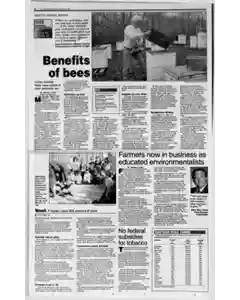
Dave Fassbinder, a Clayton County honey producer, says losing the honey subsidy would force beekeepers to raise fees for pollination and push up costs, threatening the beekeeping system. He warns it would disrupt seeds and plant production.
MENTIONED IN THIS ARTICLE
Dave Fassbinder
Clayton County
Honey subsidy keeps prices low and pollination alive
Beekeepers warn that ending the $22 million subsidy could raise food costs as bees pollinate alfalfa strawberries and crops. Dave Fassbinder, a midsize producer in Iowa, says pollination support helps cover costs amid rising hive expenses and imports.
MENTIONED IN THIS ARTICLE
Cornell University
Phillips
Iowa
Wool Subsidy Ends Threaten Rural Economies and Wool Prices
The wool subsidy program paying 300 percent of market price supports 100,000 families and 350,000 rural jobs. In 1993 Texas Wyoming and Montana received most subsidies. ending the subsidy in 1995 could hit Western sheep producers hardest while urban shoppers see little change.
MENTIONED IN THIS ARTICLE
Midwest
American Sheep Industry
Iowa
Greiner
Texas
Wyoming
Montana
Australia
Farmers become educated environmentalists say Iowa official
Stan Herr of the Iowa Farm Bureau says modern farmers are highly educated and must follow EPA rules for chemical use. They monitor wind, recordkeeping, and water quality. He notes farmers face debt, pay taxes, and work long hours while lobbying to reform farm subsidies.
MENTIONED IN THIS ARTICLE
Mariene Lucasarmers
Stan Herr
Iowa Farm Bureau Federation
Marion
Environmental Protection Agency
Herr
Iowa Honey Crop Shows Strong 1993 Production
Beekeepers in Iowa maintained 60 000 colonies and produced three million pounds of honey in 1993. Average yield per colony was 49 pounds, and the total crop value reached 1.6 million dollars according to USDA data.
MENTIONED IN THIS ARTICLE
Iowa
No federal subsidies for tobacco in the modern era
The article notes tobacco is not a federally subsidized crop since 1982. Growers pay an assessment tied to production to fund a price support system via loans and quotas aimed at profit. The no net cost program costs little to administer, with no government payments or active export program since the last agriculture appropriations bill.
MENTIONED IN THIS ARTICLE
Congressional Appropriations Committee
Congress
Jane Phillips
Greiner
Sharon Diel
Agricultural Stabilization and Conservation Service
Washington
Treasury
Also Mentioned on This Page
Chu
Marlene Lucas
Cedar Rapids
California
Florida
Fassbinder
Waukon
Postville
Garnaville
Barb
China
United States
National Honey Board
Gazette
Clear Creek Community School
Oxford
Nick Greiner
Rockwell
Federation
Iowa Farm Bureau
USDA
Allamakee
Benton
Black Hawk
Buchanan
Cedar
Clayton
Delaware
Dubuque
Fayette
SS Sninstristisnsetnseinenssnstsusinenesennanstiunessinees
Iowa Agricultural Statistics

 This is just the beginning! Our collection holds over 300 years of history, including rare newspapers, obituaries, marriage records, birth records, and so much more—most of which you won’t find anywhere else!