Early Sumerian Babylonian Civilizations Rise and Rule
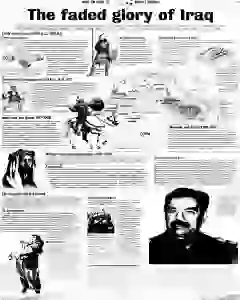
Sumerians settled southern Mesopotamia around 5500 B.C. and built Ur Lagash and Babylon. They invented irrigation writing and the wheel. Hammurabi united Sumer and created one of the earliest law codes. Babylon’s first empire fell to Hittites in 1595 B.C.
MENTIONED IN THIS ARTICLE
Mesopotamia
Iraq
Tigris
Euphrates
Lagash
Babylon
Hammurabi the Great
Sumer
Turkey
The
Assur
Syria
Persian Gulf
Nineveh
Fate of Babylon and Mesopotamia Across Empires
The region fell to successive powers starting with Persia in 539 B.C. followed by Alexander the Great in 331 B.C. Abandonment of major cities occurred before Parthian control in 126 B.C. The Parthians were later replaced by the Sassanid Persians in A.D. 227, who ruled until the rise of Islam.
MENTIONED IN THIS ARTICLE
Babylon
Mesopotamia
Rise and fall of empires in Mesopotamia and surroundings
Notes describe early Arab Muslim conquests after 632 expanding from Spain to China, Abbasid Baghdad as a capital by 752, and Baghdad’s growth to over a million by 800. It traces Assyrian and Chaldean legacies, Nebuchadnezzar II’s Babylon, and the Mongol and Ottoman eras ending with British interest in oil and trade routes.
MENTIONED IN THIS ARTICLE
Muhammad
Saudi Arabia
Mesopotamia
Spain
China
Baghdad
Babylon
Allah
Great Britain
Persian Gulf
India
British rule and independence 1917-1958
The piece notes that oil was first found in Persia in 1908 and Britain prioritized securing Anglo-Persian oil as Turkey allied with Germany in World War I. British forces expelled Turkish troops from Mesopotamia and captured Baghdad in 1917.
MENTIONED IN THIS ARTICLE
Middle East
Persia
Iran
Turkey
Germany
Anglo-Persian Oil Company
Britain
Mesopotamia
Baghdad
Iraq gains independence under King Faisal amid British control
In 1920 the League of Nations granted Britain a mandate over the region that became Iraq. By 1932 the mandate ended and Iraq achieved sovereignty. King Faisal unified diverse groups but tribal conflicts and anti British factions destabilized the state after his death in 1933.
MENTIONED IN THIS ARTICLE
League of Nations
Britain
Iraq
Faisal
Iraq from monarchy to republic and regional tensions
After World War I Iraqi leaders sought Axis links during World War II era. British base clashes led to defeat, exiled pro Axis figures. Postwar Iraq helped form the Arab League and fought Israel in 1948 causing protests. Oil wealth spurred roads schools hospitals but inflation and Western ties fueled opposition culminating in 1958 coup that ended the monarchy.
MENTIONED IN THIS ARTICLE
Iraq
Arab League
League
Israel
Faisal I
Republic
Iraq from coup to Kuwait invasion a turbulent arc
A history of Iraq from the 1958 coup and Abdul Karim Kassem's rise to power through the Baath Party era, oil nationalization, and ties with the Soviet bloc, to Saddam Hussein's rule and the 1990 invasion of Kuwait, ending with the 1991 Gulf War. The narrative notes Kurdish unrest, revolts, and military interventions shaping Iraq’s trajectory.
MENTIONED IN THIS ARTICLE
Baath Party
Kassem
Abdul Salam Arif
Saddam Hussein
Baath
Ahmed Hasan al-Bakr
Soviet Union
Iraq
Bakr
Saddam
Draq
Kuwait
United Nations
United States
Israel
Saudi Arabia
Also Mentioned on This Page
B.C
Assyria
Hoy B.C
Nebuchadnezzar II
Jerusalem
Nebuchadnezzar
Hangin
Mar
Jordan
SYR
Durag
TURKE
Saude Arabia
the Republic
Abdul Karim Kassem
Tae

 This is just the beginning! Our collection holds over 300 years of history, including rare newspapers, obituaries, marriage records, birth records, and so much more—most of which you won’t find anywhere else!