Poem Fragment Rallies Child to Wander
A lyrical voice whispers to a child to escape with it. The speaker portrays the world as unworthy of the child and invites companionship in a nocturnal or otherworldly journey.

28 Oct 1871
Page 1
 This is just the beginning! Our collection holds over 300 years of history, including rare newspapers, obituaries, marriage records, birth records, and so much more—most of which you won’t find anywhere else!
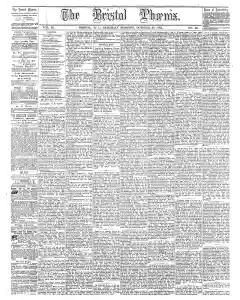
This newspaper page contains 29 articles. Subscribers can read the full text of each article.
Newspaper
Bristol Phoenix
Location
Bristol, Rhode Island, United States of America
Date
Oct 28, 1871
Page
1
A lyrical voice whispers to a child to escape with it. The speaker portrays the world as unworthy of the child and invites companionship in a nocturnal or otherworldly journey.
Susan Lippe defies her father’s antieducation stance and, with Henry Coverdale posing as a farm hand, wins over the stubborn landowner in a court showdown. The judge marries the couple after Coverdale proves his case and Susan’s suitor becomes her husband, yielding a changed stance on education.
A man departing for Congress tells his grandson Lippe Coverdale to study hard, inspiring remarks echoed by a joyful Susan. The exchange underscores family ambition and civic aspiration reflected in a moment of departure.
Miscellany quotes De Witt Talmage on sunshine versus gloom in duty and life. The piece cites Thomas Chalmers, faith vs fear of misfortune, and contrasts the McCheynes with Summerfields as examples of cultivating sunlight amid church history.
A discussion on how shocking news or instant violence affects the nervous system and life. It notes that nerve strength and overall health determine resilience to sudden mental or physical shocks, with contrasts between feeble and strong bodies and the role of the brain in fear and fatal events.
Edward Everett recalls early Cambridge days with a single stagecoach to Boston, no omnibuses or railroads, limited public conveyance, Sunday home visits, and simple student rooms. He notes boot blacks like Charles Lenox becoming wealthy from boot brushing and describes frugal living with pumps and self trimmed lamps.
An anecdote from Jardin des Plantes in Paris describes an elephant famed for its keen sense of smell. After ignoring bread and cake, the elephant followed a lady with orange blossoms, accepted the bouquet, inhaled its perfume, and returned it gently, a curious display of fragrance loving manners.
The speaker Celia Burleigh notes that some people never err and have dry hearts, while others repeatedly transgress yet possess warmth and swift sympathy like an angel. The remark underscores contrasting human temperaments in her sermon collection.
Miss Laura E. Rollins of Bridgeport recalls the second south division blaze that drove crowds into chaos. She describes terrified women, a crippled German, and a wheelbarrow carrying beer as townsfolk fled amid burning pavements and falling flames. Survivors describe theft, aid for the weak, and the arrival of night with shelter scarce.
A Chinese funeral in San Francisco featured open street feasting with fruit pyramids and hogs, a rose wood coffin, and a muttering priest amid clashing cymbals. Twelve women in white headdresses and a near infant participant moved around the coffin before mourners and press carried the procession to the graveyard. At the cemetery, tables reappeared for offerings and a final exchange of chop sticks burnt and planted in the ground.
George P. Belden known as The White Chief, shot September 1 near Grand River agency Dakota territory. He left unarmed with $50 of goods to visit a Sioux camp, his body found with a pierced skull the next day and buried September 3 at the agency. Belden, 29, had lived as a wanderer with western tribes, served briefly as a lieutenant in the Civil War, then studied native languages and customs. He left a wife in Attica Indiana, a mother, and other relatives.
Sidney Smith recalls a Staffordshire drunkard named James who begs his wife for mercy as their children starve. After Sally cries out, James vows to abandon fermented liquor, choosing tea and water. His life improves instantly, and villagers recount the fourteenth of March as the day of James' restoration.
The passage reflects a life as a sermon from birth to old age with stage directions about Frost on the window and a sexton locking the church, signaling the end as the audience leaves and the key is carried home.
The article traces cuunc h bells to Italy with cymbal and bell origins in Eastern religious rites. Pliny notes ancient invention. Christians used them to summon worshippers. they appear in church frames by the sixth century. Pope Sebastian ordered daily chimes in 1665 for prayer and singing times.
A reflective line compares experience to a ship's stern light, illuminating only the road already traveled and hinting at caution for uncharted journeys ahead.
A Texas paper cites a New York lawyer who uses an alibi to claim prison time at the Tombs for larceny. It notes the motif appears in Pelham with a tailor and bootmaker, and sketches an undertaker who jokes about coffin fitting and funerary rituals.
A humorous tale shows Lundy Foote’s courtesy turning a beggar girl into wealth as a kindness inspires repeat business. It cites a London dry goods salesman famed for calmness who rises to riches through politeness and a Providence merchant who reopens to help a girl, later funding a hospital with Miss Dix’s persuasion.
A Western railroad superintendent recalls a diligent errand boy who rose through accuracy. He used spare time to improve writing, arithmetic, and telegraph skills, earning praise and promotion. The message: accuracy in any job wins trust and steady advancement.
The article argues farmers should own a 600 lb platform scale to accurately weigh grain pork and stock. Regular weighing improves profit estimates, aids buying decisions, and tracks monthly stock weights from shoots to dressed pork. Scales are essential useful implements for farming.
A friend suffering neuralgia traveled to Germany for treatment by a renowned physician who allegedly cured him quickly. The remedy, a poultice from field thistle leaves and a tea made by boiling leaves, is said to have relieved pain and achieved cures in many cases.
A former printer who left the trade to study physics and become a doctor argues that printing reveals every fault to the eye while medicine buries them within the patient.
The ad bureau outlines rates for square inch advertisements at $1 00 for a week and 25 cents for each subsequent insertion. Special notices for marriages and deaths are double. Ads must be prepaid, yearly contracts possible, and submissions due by Thursday noon for the next issue. Religious obituary and political notices are charged as advertisements.
A dramatic legal tale where John Adolphus uses nautical knowledge to expose false testimony in a murder case aboard a West Indies bound ship. His questioning reveals each crew member's role during peril, leading to the mate's confession of killing the captain.
A speaker denounces a society filled with unfulfilled people and wastes of talent. He urges each generation to improve on parents with boys seeking achievement and girls becoming noble women, predicting a distant millennium of peace once humanity earns it. The message echoes moral reform and self improvement.
A Boston Advertiser correspondent recounts a potato race in East Wilton New Hampshire. Three contestants sprint along lines of fifty potatoes each yard apart to baskets, totaling seven thousand three hundred fifty feet with turns. One finished in just over nine minutes, the others close behind. The writer notes the strategic order of long and short runs for breathing.
The piece argues that adequate sleep restores brain energy and prevents mental decline. It emphasizes that busy thinkers, especially scholars, are most in need and that seven to eight hours of refreshing sleep safeguards against insanity and brain softening. Sleep is praised as a near perfect inborn remedy and physician.
A Kurdish legend explains that after Noah’s Ark settled near Mount Sindshar a serpent saved the leak by entering the rock. Noah later burned the serpent as advised by Gabriel, and its ashes became fleas flies lice and other bloodsucking vermin.
A proverb-like remark contrasts loyalty in hardship with vulnerability in ease. It suggests true friends endure trials together, while abundance of good times invites trivial attention from many. The line underscores steady support as a core social virtue.
A concise reflection notes that few people choose censure when it benefits them, since praise can deceive and mislead. It presents a moral about discernment and the value of honest criticism over flattering praise.
We want people to find what they are looking for at NewspaperArchive. We are confident that we have the newspapers that will increase the value of your family history or other historical research. With our 7-day free trial, you can view the documents you find for free.
People find the most success using advanced search. Try plugging in keywords, names, dates, and locations, and get matched with results from the entire collection of newspapers at NewspaperArchive!
You can also successfully find newspapers by these browse options. Explore our archives on your own!
Browse by location and discover newspapers from all across the world.
Browse by date and find publications for a specific day or era.
Browse old newspaper publications to find specific newspapers.