Be Thou True Be Thou True Poem Refrain
The verses urge steadfast love and patience with fate, urging sincerity and fidelity. A reflective, moral lyric speaks of enduring trust and hopeful waiting, emphasizing true commitment over suspicion.

16 Oct 1875
Page 1
 This is just the beginning! Our collection holds over 300 years of history, including rare newspapers, obituaries, marriage records, birth records, and so much more—most of which you won’t find anywhere else!
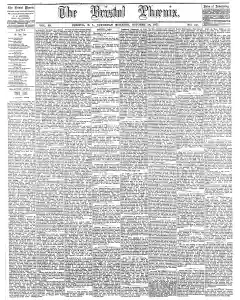
This newspaper page contains 48 articles. Subscribers can read the full text of each article.
Newspaper
Bristol Phoenix
Location
Bristol, Rhode Island, United States of America
Date
Oct 16, 1875
Page
1
The verses urge steadfast love and patience with fate, urging sincerity and fidelity. A reflective, moral lyric speaks of enduring trust and hopeful waiting, emphasizing true commitment over suspicion.
In the Texas Bar mining camp, Timid Sims, an undersized careful dreamer, struggles for work and social acceptance. He defies risk by staking a claim near Bixel’s Flat, only to clash with Jim Freemantle and rivals who threaten bullets over disputed boundaries. Meanwhile Whang Chu runs a Chinese store and crafts a clumsy ark boat with painted eyes.
On the Stanislaus a frail ark set afloat amid joss fires and opium smoke, while Whang Chu and crew lash through a treacherous, swollen river. The craft stalls near Black Rock as five Chinamen join the voyage, and Timid Sims shelters and tests mutinous drift. A grim forecast lands on a warning from Jim Freemantle as gold seekers tally another day’s rough haul and talk of danger at the crossing.
Sims dives into the treacherous Owen River to save Whang Chu from the deadly current and Big Canon. The crowd fears death but Sims risks everything, braces the line to the Chinaman, and vanishes with the river swallowing the scene. Timid Sims is reborn as the crowd watches in awe.
A fragmentary quote suggests a moral or temperance note about honesty, order, and regulated mind. The garbled text hints at guidance on conduct, decorum, and self control within a social or domestic reading. No clear persons or organizations are identifiable.
A brief meditation on communication and virtue noting that those with most should avoid slander. It asserts that avoiding wrong strengthens the disposition to do right and that men speak by words while animals communicate by signs.
A short adage urges helping those worse off than you to gain perspective. The saying suggests personal improvement and happiness arise from acts of kindness and charitable effort toward others. It frames generosity as a path to feeling richer in life.
Observers note that excessive insistence by the speaker fuels suspicion he knows his own statements may be false. The exchange prompts questions about motive and credibility among witnesses.
A thought on human vanity notes that the least praise from others outshines our own grandest self-praises, suggesting external validation carries unique joy beyond self-endorsement. The remark emphasizes humility and the social value of kind words.
A maxim on perseverance notes that belief in impossibility invites failure, while steady effort enables progress. The message emphasizes steadfast persistence as the path to conquering challenges despite doubt and hardship.
A guidance on courteous speech urges pleasant address to promote smooth dealings. It emphasizes that polite interaction fosters willingness to engage in any future transactions or discussions. The tone is practical and aims to improve personal conduct in everyday exchanges.
A reflection on how the death of friends brings wholesome grief while property loss festers as a deep wound. The piece contrasts emotional solace with material hardship, underscoring the lasting impact of financial damage on individuals and communities.
The fragment contrasts tears as dew reviving the earth with Morse as a volcanic force vomiting lava that harms and destroys, presenting a stark emotional dichotomy without clear context or source.
An aphoristic line about Hapry praising resilience. It declares that enduring the highest and lowest fortunes with calm equanimity robs misfortune of power. The reflection centers on inner strength amid changing circumstances.
The quotation urges every professional to pursue merit in their craft, noting its universal esteem and priceless value that cannot be bought. It emphasizes sustained effort as the path to true merit recognized by all.
Quotation on how people react to life positions laughter as pride and anger as ill nature in response to the world. The line reflects social judgments attached to emotional responses.
Poetic reflection notes that brightness can be offset by clouds and winter’s bite, yet after summer’s warmth comes renewal. The verse links cares and joys with changing seasons, suggesting cycles of fortune and hardship.
A reflective charge argues that rigid allegiance to group movement erodes personal identity. The speaker laments marching by sections, deeming such practice a form of mental and moral slavery to fashion and appetites, urging for greater selfhood.
A reflective statement asserts that even strong talents require opportunity and patronage to be recognized, and that friends’ encouragement can help bring abilities to public notice. It emphasizes the role of external facilitation in highlighting merit.
A proverb warns that truth rests on a solid rock but falsehood sinks into sand. Bold examination reveals foundations yet may cause a collapse if the base is not real. The message emphasizes rigorous inquiry over rote acceptance.
A poetic meditation compares a cannon shot breaking smoke to death dissolving life briefly only to reunite elsewhere forever. The passage uses vivid imagery to frame mortality as a transient fracture followed by an enduring afterlife.
The passage notes that some individuals persist in gross self deception and habitual deceit. It contrasts blundering observers with those skilled in falsehood, whose preference for complex schemes makes plain, simple aims seem tasteless.
A reflective piece contests the proverb no man is his own enemy asserting that harming oneself harms family and friends. It questions how self-abuse of talent health or fortune can be isolated from others and challenges the proverb’s accuracy.
A brief moral verse contrasting the miser who sacrifices present joys for others after death with the spendthrift who wastes wealth. It extols self denial to benefit others, praising the one who sows for others to reap and saves for relief of labor.
An 1860s note explains using iron expansion to move a 460 foot bridge traverse in Holland. By bolting one end and letting the other heat expand, then securing, workers shifted the piece into place. Repeated heat and cooling cycles moved heavy structures precisely.
Doctor Burg argues wind instrument use may protect against pulmonary weakness, citing cholera immunity in copper workers and wind players. He references Sax and wind instrument factories as evidence of low consumption among musicians, suggesting medicine may soon adopt wind therapy for lung diseases.
Dr Hall condemns the old habit of leaping from bed at first waking. He advises children under eighteen to rest and gradually awaken by 15 to 20 minutes of slow movements. Sudden rises disrupt circulation, tiring the body by noon and stressing the heart.
The London Builder advises lighting a dark room on a narrow street by placing the outer pane flush with the wall and rough grinding its glass. This design creates a faceted external surface that captures light from the sky and opposite wall, reflecting it into the room as if the sky were beyond the window.
A Philadelphia inventor has created a water velocipede with three airtight cylindrical floats and a central paddle wheel. In a Delaware trial, the device reportedly sailed successfully, with the rider propelling it by the feet, potentially beating the fastest oarsmen.
A call to individuals to think for themselves while listening to others. Weigh what you say when alone to remove false notions and unprofitable ideas, thereby becoming better men and women and contributing to elevating the human family.
An archaic-sounding riff questions humanitys reach and the limits of knowledge. It casts doubt on astronomy, dreams, and natural signs, suggesting a destiny sealed by heaven and a labyrinth of mystery beyond human understanding.
B P Ware explains seaweed varieties’ value as manure. Eel-grass protects crops and lights soil but lacks fertilizing power. Kelp ferments into rich compost, supports potatoes cabbages and mangolds, with Deer Island yielding 73 tons of mangolds from kelp. Rockweed or irish moss offer similar benefits, while rockweed tops dress in wet seasons.
A New York Methodist clergyman and friends opened the Lodging Rooms of the Howard relief committee in a vacant police building at 49 Leonard Street. From December 13, fourteen homeless men slept there, then fifty, with daily growth reaching over two thousand weekly. The plan aims to feed, shelter, and wash clothes for all in need as winter relief, funded by local volunteers and support from merchants and residents.
A moral meditation on gossip's ruinous power. The piece describes friendships, marriages, and family bonds dissolving under rumor and slander, likening gossip to a potent weapon that wounds innocent people and harms noble lives in a bleak portrait of social decay. The narrator warns that gossip breeds doubt, despair, and tragedy across society.
A historic sketch describes a submarine rail idea linking Cape Clear in Ireland to Newfoundland with a double track system laid beneath the sea. The plan faces doubts about locomotive smoke and capital, though modern engines may dispel the fumes. Who will form the company and take shares?
A Detroit Free Press item recalls a woman at a railroad depot who posed a flurry of questions about Grand Rapids Muskegon travel. She asked about fares schedules baggage checks tracks layovers through tickets and even whether dogs are allowed in passenger cars. The depot policeman kept quiet as she waited for train time.
The piece argues family newspapers are essential to a household and personal advancement. It asserts readers seek national and foreign news, political content, and literary and scientific journals to satisfy a hunger for knowledge, linking literacy to material prosperity and social standing.
Extracted from Eglantine by Eliza Tabor the passage reflects on the ocean as a symbol of law, purpose, and steady change. The speaker finds rest in the unalterable laws of nature, viewing the tide as a metaphor for life’s slow progress toward a future revelation.
A Brooklyn Journal of Commerce note argues mental state heavily affects health. It states sorrow and disappointment impair bodily function, while agreeable emotions boost nerve activity and circulation, making happiness often tied to physical well being even if illness persists.
A Virginia scene from Harper s Magazine recounts a white house servant visiting her former home in Richmond. A substitute mulatto maid is blamed for sloppy work, prompting the line You can't get grammar and clean corners out of the same nigger. The remark raises claims about race and education.
A Virginia and a Yankee picket trade jests on shooting skills. The Virginian recalls Mississippi shots at three hundred yards and Vermont practice where a cider barrel bung hole tests accuracy, with a boast that no one has ever been expelled in ten years.
The text argues advertising brings crowds to a business, burdens the owner with inquiries and stock handling, and risks exhausting goods. It warns that newspaper exposure can flood a shop with drummers and country visitors, creating a lively scene and extra work. If one wants no action, stay quiet and avoid advertising.
Advertisements priced at 1.00 per square for one week with 25 cents per additional insertion. Twelve lines or less equal a square. Special notices for marriages and deaths double the rate. Transients paid in advance. Yearly contracts available. Privilege limited to advertiser’s own business. Insertion deadline Thursday noon. Religious obituary and political notices charged as advertisements.
A rich man recalls how a father’s counsel shaped his career. He chose to stick to one niche, avoiding constant searching for better opportunities. The tale emphasizes steady work, loyalty, and accumulating trust, concluding that perseverance built his wealth and character.
A child in moccasins and a gun imagines hunting roosters after seeing a fire in a dry goods box. Neighbors watch as two boys in painted faces pretend to stage a revenge. The scene, spurred by an Indian tale, ends with the boy retreating to the wood pile.
Long experience with dogs leads to the conclusion that rabies develops gradually, not suddenly. Signs include restlessness, withdrawal, rubbing lips, abnormal mouth movements, barking without cause, gnawing chain, snapping at air, inflamed mouth and eyes, ropy saliva, vacant look, and mournful howling, with breed and temperament shaping exact symptoms.
A Coun try Gentleman piece argues that summer watering young trees often harms by crusting the surface and failing to reach roots. It explains roots extend miles and a small watering covers little soil, urging clean culture and mulching over regular shallow irrigation for best results.
Directive urging frankness and honesty, encouraging direct speech and action to do right in all matters.
We want people to find what they are looking for at NewspaperArchive. We are confident that we have the newspapers that will increase the value of your family history or other historical research. With our 7-day free trial, you can view the documents you find for free.
People find the most success using advanced search. Try plugging in keywords, names, dates, and locations, and get matched with results from the entire collection of newspapers at NewspaperArchive!
You can also successfully find newspapers by these browse options. Explore our archives on your own!
Browse by location and discover newspapers from all across the world.
Browse by date and find publications for a specific day or era.
Browse old newspaper publications to find specific newspapers.