Methven Furniture Sale Auction Notice
Memoranda indicate a furniture sale event at Methven with auction details. The fragment mentions a sped venture to BDA Edit and an auction sale of household items.
MENTIONED IN THIS ARTICLE
Methven

 This is just the beginning! Our collection holds over 300 years of history, including rare newspapers, obituaries, marriage records, birth records, and so much more—most of which you won’t find anywhere else!
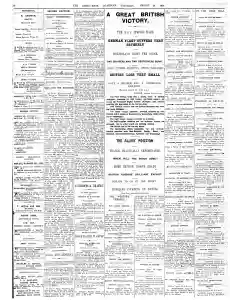
This newspaper page contains 33 articles. Subscribers can read the full text of each article.
Newspaper
Ashburton Guardian
Location
Ashburton, Canterbury, New Zealand
Date
Aug 29, 1914
Page
4
Memoranda indicate a furniture sale event at Methven with auction details. The fragment mentions a sped venture to BDA Edit and an auction sale of household items.
The Prime Minister told the House on Wednesday that unless something unforeseen occurs the general election should proceed on the December date already fixed. He warned against delaying and urged calm civic duty as New Zealand teams fight at the front and the Empire relies on continued sacrifice.
A marvellous freak of Nature reports a cow birth twin calves joined at the back. Kempthorne Prosser and Co. declares a 7 percent interim dividend. Swanson’s Tailors announce no price rise during the war, with substantial cash discounts on suits.
A financially named freezing company predicts a £10000 gain postwar. A gale rips Wanganui coast then eases as sun returns. Police testify sly-greg liquor flowing amid a well‑oiled distribution network. A Taipō Quay warehouse brick ceremony ends with a national anthem. A runaway horse smashes two gigs near Wanganui, injuring the animal amid wreckage. Local goods prices highlight motoring items and sale offers.
In Dunsandel coroner H. W. Bishop presided over an inquest into the death of David Stock killed by the express last night. The jury returned an accidental death verdict with no blame attached to anyone.
British destroyers and light forces attacked German coastal approaches at Heligoland Bight. Two German cruisers and two destroyers were sunk with many others damaged. Amethyst and Laertes were wounded, while British losses were light. Commanders Beatty, Moore, Christian, Keys, Tyrwhitt, and Goodenough praised for planning and conduct.
A strong force of marines was landed as part of a planned operation. Troops secured the area and established positions to advance the mission.
An intercepted German official message from August 28 reports the army intended to distribute ammunition to Belgium's civilian population. The aim would be to intimidate civilians and prevent surprise attacks, described as a measure to frighten the nation.
Rome reports Austria declares war and seeks aid from Britain and France. A Paris bulletin notes an Avigist dispatch about August 28 detailing a British Hussar regiment breaking German lines near Amiens and reforming to advance again behind enemy positions.
Longwy in the Moselle region surrendered after a 22 day bombardment. The small town near Luxemburg with a population around 10 000 capitulated to the Prussians. over half the garrison were killed or wounded.
Incomplete notice mentions a vessel believed sunk and missing remains from August with no further word since then. no verifiable names or locations available in the legible text.
A damaged report notes Russian shells near Magdeburg caused a blast on a vessel. The explosion shattered parts of the hull and occurred around 8:00 a.m. local time. The incident was received from St. Petersburg and August 28 is cited in the dispatch.
A Scots coal mining disaster is reported near Blyth on August 28 as a ship named Scotti Heat sinks after an explosion or damage. Crews are missing and authorities search the area for survivors.
Report highlights intensified Allied stance with forthcoming shock action. Additional British troops and the celebrated Hussars prepare a bold exploit while Indian forces are sent to the front to bolster operations.
Report from London and Rotterdam detail Allied lines near the French frontier as tenuous optimists describe German hammering below Pomerania. Second Corps faced heavy cavalry assault with heavy losses reported, while Antwerp sees discussion of Hague violation over Zeppelin bombs.
London August 28 report from The Press Bureau states that the Germans, after a naval check, withdrew from Rousain and burned the entire town to the ground. The dispatch dated August 25 notes the outcome followed the check.
Report from Saint Petersburg notes Russia has taken possession of Tilsit. German residents fled the town, leaving behind spoils for the victors as the garrison capitulates.
Wellington reports a train collided with Curtis and Co express at a Featherston Street crossing. The driver Frank Wilde, 22, single, was killed in the crash.
Nineteen seamen firemen and trimmers on the Orab and three seamen on the Limerick refused duty, demanding pay parity with troopship workers. The accused argued a legal point about signed articles, while the prosecution reserved judgment. The magistrate postponed ruling, advising the men to return to their ships and follow orders.
Report from August twenty eight notes Namur siege with 40 siege guns and 12 mile range. German batteries supported by larger guns overran forts while French and Belgian troops retreated and many prisoners were captured.
Report notes Russian maneuvers toward Danzig with mentions of battles and occupations from 1677 to 1813. It references French, Prussian, English actions and lists LOLO population as 170000.
The article outlines Lemberg, capital of Galicia, near Vienna, with a 206000 population of Jews Poles Germans and Ruthenians. It notes its 19th century status as a major Austrian city, 468 miles from Vienna by rail, on the Bug river, with cathedrals and a university.
Dispatch from Boulogne dated August 28 reports German cavalry broke through near Arras but French forces countered quickly and hold the line with the situation under control.
On August 28 British ships arrived and the Admiral proposed landing a force to defend Ostend against marauding Uhlans. Town councillors initially declined to avoid alarming visitors, but after a Tuesday clash with Uhlans they relented and reconsidered the proposal.
The fragment mentions a Great Peppermint Cure labeled Woods and references Gd 28 and Gd 4 as date-like markers, but it lacks clear persons places or events to form a complete news item. No verifiable action or outcome is present.
Mr Asquith told the House of Commons that Sir John French faced immense German odds as British troops prepared for crucial action described as a grave trial in the ongoing conflict. The report notes August correspondence from London detailing strategic pressures.
The Japanese Ambassador officially denies that Japan intends to send a fleet to the Adriatic, stating no such plan exists. The denial follows rumors circulated in Washington on August 28.
Fragmentary notes dated August 29 describe British perceptions of Prance and Indian forces facing internal troubles. The text references disapproval toward Indians and possible debarring amid unclear events. The fragment lacks coherent details but notes tension and external pressures.
An official notice states the Lords authorize deployment of native Indian troops to the wat. The wording emphasizes a formal sanction by the Lords though details remain sparse. This marks a shift in military staffing and raises questions about regional roles and command structure.
In the Commons Mr. Squith questioned the delay and promised to do all possible to relieve the strain on the judiciary in the public interest. The discussion focused on ensuring timely decisions and maintaining access to justice.
In Hertfordshire a constable was injured in a confrontation near Hughin as authorities pursue suspected spies. Details remain limited and ongoing investigations are referenced by officials.
Fragmentary notes indicate Prince Albert III entered a college in 1908. Additional text references Colline pendicitis and Royal Navy, with unclear connections to the prince and year 1895.
A fragment notes rapid recruiting efforts in London during August 1938 linked to Marl Kitchener and a British military push. The text mentions received timing and evening reporting of the recruitment push.
We want people to find what they are looking for at NewspaperArchive. We are confident that we have the newspapers that will increase the value of your family history or other historical research. With our 7-day free trial, you can view the documents you find for free.
People find the most success using advanced search. Try plugging in keywords, names, dates, and locations, and get matched with results from the entire collection of newspapers at NewspaperArchive!
You can also successfully find newspapers by these browse options. Explore our archives on your own!
Browse by location and discover newspapers from all across the world.
Browse by date and find publications for a specific day or era.
Browse old newspaper publications to find specific newspapers.