Cleveland’s Message on Venezuela Dispute and Monroe Doctrine
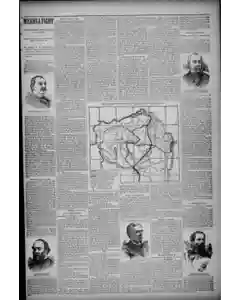
President Cleveland sent Congress a message defending the Monroe Doctrine amid the Britain Venezuela boundary dispute. The reply from Britain is discussed, with emphasis on the doctrine’s place in international law and the need to protect American peace and institutions. The document argues the United States may enforce the doctrine across hemispheric borders to prevent European interventions.
MENTIONED IN THIS ARTICLE
International Press Association Service
Cleveland
Congress
Britain
Republic of Ven
United States
Monroe
Venezuela
Old World
Reublies
Lord Salisbury
Oltney
America
Great Britain
Mexico
Central American
Monroe Doctrine and British Venezuelan boundary dispute
President Grover Cleveland argues the Monroe doctrine justifies U S resistance to European intervention in American affairs and calls for a formal inquiry into the Venezuela British Guiana boundary dispute. He urges congressional funding for a commission to determine rightful boundaries and warns against yielding to colonial pressure.
Olneys Note of July and the boundary dispute
Secretary Olney’s note reopening negotiations with Great Britain outlines the long boundary dispute with Venezuela. It reviews British expansion past Lord Aberdeen’s 1884 line, cites six summarized points of the conflict, and presses the United States to decide how far it should intervene to protect its honor and interests. This correspondence accompanies the president’s message.
MENTIONED IN THIS ARTICLE
Great Britain
Venezuela
United States
Republic of Venezuela
British Guiana
Congress
Olney
Bayard
Schomburg Line
Lord Aberdeen
Lord Salisbury
Alaska
Monroe doctrine in American policy faces British claims
The article surveys Secretary Olney’s embrace of Monroe doctrine precedents as a guide to protecting American independence and interests in the Venezuela dispute with Great Britain. It contrasts British arbitration offers, territorial claims, and U S duty to defend regional stability and self government versus European entanglement.
MENTIONED IN THIS ARTICLE
United States
Olney
America
Europe
Congress
South America
Mexico
Central America
Great Britain
Cuba
Spain
Mosquito Coast
Orinoco
Venezuela
Lord Salisbury
England's Slim Case in Venezuela Boundary Dispute
The article outlines the Venezuela British Guiana border clash over the Schomburgk line and western claims, noting British demands for damages, Venezuela's rejection, and the incident with Guiana police near Urini river. It compares to a Guatemala incident where damages were limited, arguing the British claim is excessive and unnecessary to quote Salisbury's letters.
MENTIONED IN THIS ARTICLE
Washington
England
Venezuela
British Guiana
Essiquibo River
Lord Salisbury
Schomburgk Line
Great Britain
Urini
Yunmari
Behrens
Baker
Urini River
Guiana
London
Berlin
Guatemala
Senate Receives President’s Message On Venezuelan Question
The president’s message reached the Senate at 12:30 with strong interest among members. Senator Morgan moved to enter executive session to discuss the Venezuelan question behind closed doors, doors closing at 12:40. By 1:00 the message was laid before the Senate and officials explained the session focused on nominations as chambers echoed with applause.
MENTIONED IN THIS ARTICLE
Senate
Morgan
Committee On Foreign Relations
Chandler
Powerful Fleet Ordered to Coast of Venezuela
Secretary of the Navy orders a strong fleet to the Venezuelan coast. Flagship New York with 21 knots leads battleships Indiana Maine and Texas plus cruisers Columbia Raleigh Cincinnati Montgomery. Ships mount heavy guns as defense of the Monroe Doctrine. Fleet sails at once.
MENTIONED IN THIS ARTICLE
Washington
Secretary of the Navy
Venezuela
Admiral Bunce
New York
Schley
Indiana
Evang
Maine
Crowninshield
Texas
Glass
Columbia
Sands
Raleigh
Miller
Cincinnati
Johnson
Montgomery
Davis
Also Mentioned on This Page
Emergency Commission
President Cleveland
Africa
France
Japan
China
Grover Cleveland
Turkey
Shiebudt
Schomburgk
Lord Granville
Ambassador Bayard
Vene
Zuela
Julian Princefote
Herbert
Crespo

 This is just the beginning! Our collection holds over 300 years of history, including rare newspapers, obituaries, marriage records, birth records, and so much more—most of which you won’t find anywhere else!