Logan and Rover Editors and Proprietors
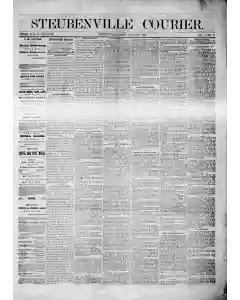
W W T Logan and D P Rover are named as editors and proprietors in the newspaper masthead. The item confirms ownership and editorial leadership without additional context or events.
MENTIONED IN THIS ARTICLE
W.W. T. Logan and
D. P. Rover
Lincoln vows to go down with flying colors in war call
A Washington private talk quotes President Lincoln saying he issued the five hundred thousand men call with knowledge of anger it would stir and that he would go down fighting if overthrown. The piece argues he will fall despite the storm of public indignation and misrule.
MENTIONED IN THIS ARTICLE
Lincoln
Washington
Nigger on the Brain Advertising a Democratic Remedy
A crude 19th or early 20th century opinion piece claims “Nigger on the Brain” as a disease likening it to whisky and mania potu. It asserts victims suffer vision and violent symptoms, then predicts the disease will fade as the “infallible Democratic Constitutional remedy” clears the country.
Peace by ballot: campaign for Lincoln’s defeat urged
A Civil War era appeal urges voters to back a Democratic triumph in November to end Lincoln’s presidency. It argues Lincoln will refuse peace until slavery ends and urges Southerners to demand peace on honorable terms, organize, and vote to remove him. It frames reform through the ballot as the path to demoralize Washington and reach settlement.
MENTIONED IN THIS ARTICLE
Lincoln
Confederate States
Washington
South
North
War aims and conscription debate over slavery policy
The letter to the Southern Peace Commissioners condemns Lincoln’s war aims as abolition of slavery and attacks the draft. It argues the war is not for the Union but for freeing the enslaved, urging white men to speak out and resist conscription to protect constitutional rights and peace. The piece frames the issue as a people’s test of resolve against emancipation and Federal power.
MENTIONED IN THIS ARTICLE
Tanconn
Canada
Peres
Radical Party
Abolition scarecrow tale ridiculed by editorials
The piece dismisses abolitionist conspiracy claims as overblown and warns Lincoln to resist martial law. It links the so called plot to Constitutional Democrats aiming to oppose abolitionism legally, urging restraint and adherence to constitutional rights amid a heated political climate.
MENTIONED IN THIS ARTICLE
Abolition Papers
Knight of the Golden Circle
Humbug
Lincoln
Vallandigham
Ricuaro
Brenano
Abolition Party
Constitutional Democratic Party
Lixcomnbe
Mr. Linco
iIntral
Internal commotion in the Republican Canmap
A New York World sourced document shows Republican fears over Lincoln’s renomination. It warns of Democratic aims to elect their candidate and insists on no fairness in the proposal. It urges pre adjournment action by Republicans to avoid a split or civil conflict and discusses possible leadership moves and a convention.
MENTIONED IN THIS ARTICLE
New York World
Lincoln
Congress
Chicago
Orth
Canvns
Johnson
Saksio
Prom
New York Tribune
Rio Grande
Ww White ranieiarares er ee seven stairs case
Fragmentary text provides unclear references to a seven stair case event or incident. It mentions names and locations in an unreadable OCR segment, offering no verifiable details or concrete facts to summarize safely.
The Home, Love, and Fanaticism Debate in Life
A reflective piece argues that true joy rests on love not selfishness within homes. It contrasts refined, delicate minds with harsh domestic realities, urging restraint of ego and promotion of peace. It then condemns radical fanaticism in politics, claiming it destroys humanity and endangers the nation.
Ancient and Modern Fanaticism in Historical View
From the Journal of Commerce the essay argues fanatics share a fixed conscience and moral rigor, capable of immense cruelty. It cites Marcus Aurelius and Julian as examples of conscientious persecutors, contrasts Inquisition leaders as morally upright yet brutal, and notes Spanish historians affirm the Inquisitors’ integrity amid vast murder.
MENTIONED IN THIS ARTICLE
Ain
Bucke
Commodus
Heliogabalus
Marcus Aurelius
Julian
Llorende
Townsend
Spain
Inquisition
Barcelona
Hylton
Geome
Lincoln Civil War Peace Terms Contested in Niagara Falls Debate
The Louisville Journal cites Lincoln’s stance against any peace proposal that doesn’t free the enslaved, condemning the move as a heavy responsibility on the nation. Detroit Free Press criticizes the administration’s war forecasts and Lincoln’s leadership, predicting continued bloodshed and missteps as campaigns proceed amid public weariness.
MENTIONED IN THIS ARTICLE
Louisville Journal
Lincoln
Niagara Falls
The Sixty Days Fable and War’s Bitter Lesson
A Civil War era editorial rebukes Northern complacency about the South’s strength, arguing for justice and restraint over conquest. It contrasts Republicans’ early optimism with costly battles and urges a path of reconciliation, equality, and firm faith in liberty to quell rebellion. It also challenges wartime rhetoric that dehumanizes the enemy and calls out religious hypocrisy in support of bloodshed.
MENTIONED IN THIS ARTICLE
Congress
South
Seward
Astor House
North
Ae Run
Springfield
Lexington
Ealwards
Oro
How to Feed Horses Hay to Prevent Coughing
A reader reports that feeding hay through a rack causes dust to reach the lungs and trigger coughing. We describe a method to feed hay naturally without a rack, removing the rack and letting horses eat on the barn floor, clearing dust and improving digestion. The writer notes better health and suggests broad applicability for horses on farms.
Tala qge ofiael in the an hones the eenene fer
Unable to extract a coherent event from the provided text. The fragment lacks identifiable persons, organizations, places, dates, or a clear action to summarize into a newspaper card.
MENTIONED IN THIS ARTICLE
Tala
Ofiael
Another Side to the Peace Negotiations
A fragmentary wartime remark relays Jefferson Davis’s view that the conflict must end within the current generation, that self-government is at stake, and that slavery is not the cause in itself but a broader fight for survival and union. The speaker cites Davis as truth-telling in a volatile moment.
MENTIONED IN THIS ARTICLE
Connectic Vm
Jefferson Davis
Ant Trap For House Ant Control
A 19th century tip suggests using a dry sponge sprinkled with fine white sugar to lure ants. Place near trouble spots, ants relocate to the sponge, then dip it in boiling water to flush them out. Reapply sugar to trap more ants, clearing the house of the pests.
Tar Grave and the grave of an enemy
Reflection on human virtue and remorse, arguing that character is the best thing a man can take to the grave. The poet meditates on burying errors and defects, and the pity felt for the dead who shared the earth. A contemplative moral verse on compassion and integrity.
Josh Billings on the best kind of dog
The comedian extols a wooden, low cost dog that is easy to repair and reliably loyal. He claims such a dog is easily kept, easy to find, harmless to children, and does not follow others, advising readers to obtain a small one.
MENTIONED IN THIS ARTICLE
Josh Billings
Cotton and the Southern staple in ladies beauty talk
An opinion attributed to Fanny Fern suggests cotton influences female elegance. the piece notes women owe some symmetry to the pure and nutty Southern staple and ranks cotton among Earth’s products close to their hearts.
MENTIONED IN THIS ARTICLE
Fanny Fern
A Robber Spares Home Amid Wife’s Courageous Silence
A terminally ill man is watched by his exhausted servants when a masked intruder enters at midnight. The wife, signaling silence, offers her purse and keys. The robber, moved by her devotion, departs without stealing, leaving the home unharmed.
Simple antidote proposed to curb accidental poisonings
A correspondent suggests a cottage remedy scarce in any home a dessert spoonful of wastard mixed in warm water acts as an emetic and should be kept ready to save lives from accidental poisonings. The writer notes its safety when used promptly to avert untimely death.
Fragmented Bible Narrative Snippet
A damaged OCR fragment questions why Joseph's brothers cast him into a pit and one young person claims it was a good opening for the young, suggesting a family motif of deception and ambition.
MENTIONED IN THIS ARTICLE
Joseph
Fragmentary text about organized groups and federal rule
A garbled OCR passage discusses organized forces and federal authority, touching on potential marches and inquiries into actions. The fragment hints at tensions with federal rule, mentions land and intel feeds, and notes unfamiliar terms without clear context or names.
Also Mentioned on This Page
J. M. Layton
Market Street
Steubenville, Ohio
Mickerson, Harris & Moseley
North Third Street
Axch
Philadelphia
Ac. &C
Murray
Warren Streets
New York
Robert McEneney
Jefferson Branch Bank
Cautftman Or
Chex Importers
China
Queensware
North Fourth Street
Philadelphia, PA
Union Steam
Coffee and Spice Mills
Daniel Bohler
G. Hummel
Turkey
Fifth and Smithfield Sts
Pittsburg
Yanere
Murphy
Main Street
Wheeling
West Virginia
Tne
Allegheny Mountains
Amoum
Wein
W. Va
M. Rheinst
Mneen Wisken Boats
Aml
M. Rhein
Toeer
Steubenville
Ich
The
Journal of Commerce
Detroit Free Press
Southern and
Bratham
American Republic
Tes
Western Asia
Tran
Bactriana
Mahomet
Philip
Vienna
Sobieski
Europe
Italy
Garibaldi
Austria
Rome
Alaric
Napoleon
Russia
Philip II
Hannnibal
Netherlands
England
House of Lords
America
Agamemnon
Brant
Aray
Nantes

 This is just the beginning! Our collection holds over 300 years of history, including rare newspapers, obituaries, marriage records, birth records, and so much more—most of which you won’t find anywhere else!