Fragmented Practice Note From Unreadable Source
Incoherent OCR fragment contains disjointed names and letters. Clear entities or events are not recoverable, leaving only a garbled collection of terms and partial words.

 This is just the beginning! Our collection holds over 300 years of history, including rare newspapers, obituaries, marriage records, birth records, and so much more—most of which you won’t find anywhere else!
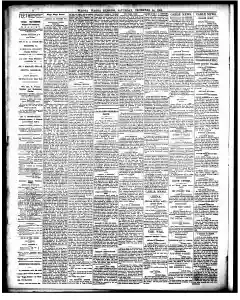
This newspaper page contains 21 articles. Subscribers can read the full text of each article.
Newspaper
Wagga Wagga Express
Location
Wagga Wagga, New South Wales, Australia
Date
Dec 22, 1900
Page
2
Incoherent OCR fragment contains disjointed names and letters. Clear entities or events are not recoverable, leaving only a garbled collection of terms and partial words.
A contentious Australian federation debate unfolds with Prime Minister Barton and Opposition figures. The text notes Barton’s leadership, Labor support, and calls for constitutional arrangement. critics warn against rapid federation while advocates emphasize national unity and imperial ties amid political maneuvering. The piece references key figures and institutions shaping the federal move.
The piece reads as a garbled historical note referencing political factions, colonists, and loyalty questions. It mentions names like Willian and Kruwod, mentions a colony, and hints at war or maintainment of control, but the exact events, dates, and clear facts are obscured.
The readable fragments reference a parade of names and places including Wagga, Getna, Alero, Tow Mali, and Major Mole de Sapa. Nations and campaigns drift through garbled text, with scattered mentions of campaigns, elections, and officials, implying a historical notice or survey of political activity.
A lengthy, and partly garbled, 1920s-style crowding of local notes and names recounts a sequence of events and individuals across places like Lanecord, Coolamon, and surrounding districts. It mentions accidents, trials, and various court or police references, with scattered monikers such as Ahmad, Jared, and Loyd, plus a jumble of place names and dates. The prose mixes crime hints, political talk, and social notes, portraying a restless community atmosphere.
Fragmentary OCR passage references a land action, a council matter, and multiple names in disjoint phrases. The readable bits mention a land dispute, a meeting, and warrants but lack coherent events, dates, or identifiable entities to form a solid summary.
Fragmented OCR records a club meeting at the Heyer Hotel with attendees including Gardiner Ahern WJ Souks OV Wilduy and Greve. The document references a Canton meeting, motions, financials, and mentions Me, Mawlomorih, Mr. Miiciohworn, and William Mow among others in a noisy, partially legible report.
A garbled report chronicles a city meeting at the Wesleyan school and nearby events. Names like Dowsbort Muriel Urey and Thomas Winner appear amid disrupted text. The piece references a Commonwealth Fair, gate counts, and a muddy day with uncertain details and partial outcomes.
In a garbled dispatch from an international desk, reporters note rising complaints over delays and a shifting stance by unnamed Chinese and allied powers. The piece hints at troop movements and policy shifts affecting regional stability and trade.
Fragmentary cable news text describes a violent event at a harbor area with casualties and security actions. It mentions British allied forces and an amvitation or warrant context, with references to a following group and a request for pardons. The readable portions indicate a violent incident and subsequent actions but lack clear names, dates, or places.
Confused dispatches describe Cape forces massing at Band The Sua and surrounding approaches as 2000 boats reportedly engage in action. Troops deployed to defend Raglan and Raglan port, with naval cover and bombardment indicated.
General notices describe a routine commercial listing with references to cables, shipments, and prices. Names of firms appear with scattered locations and dates, indicating ongoing trade activity and standard ordering procedures in a regional economy.
Partial readable line from a cable page mentions AA men and a phrase resembling Wig. Limited readable context prevents full attribution or event details.
A garbled London page notes a monerathon event and a bear theme amid unclear names and figures. The fragment references Maunsell Eve and possible prices or scenes but details are unreadable, leaving the core item obscure.
In London on a Thursday gathering, br. Thomas Kennedy was praised as a mentor of the United Free Church, highlighting his long service and influence within the denomination.
An unreliably garbled OCR fragment discusses the British cabinet and figures like Lord Lamont, mentioning morale and wartime concerns. The text is unreadable in large parts, omitting clear dates, actions, or outcomes.
Unclear OCR fragment mentions London War Office items and a list of names and places but legibility fails. The readable parts reference London and a possible military office notice, yet concrete actions, dates, or destinations are not discernible.
A garbled OCR fragment mentions names like Me ual ting and Const tans and references arrests or legal actions. It includes scattered proper nouns such as Morea Maddog and Berry Puan with unclear context and no coherent narrative or clear event. The text is unreadable and partial.
A garbled report from New South Wales notes a coroner’s inquest in Wagga with disputed details. The fragmentary text mentions G A Tenapat and alleged acts affecting public safety, while other lines reference local officials and a call for relief.
Fragmented OCR text discusses an alleged event involving an allied extension and a deputation from Sydney Melbourne and other places. It references talking about lag weaving and work to how down. The passage is garbled with many unreadable phrases, but hints at political or heritage disputes and an alleged ingould.
A fragmentary OCR reads as a family named Alana with garbled lines describing a scene. The readable bits mention a family and town context but lack coherent events, dates, or clear actions to summarize into a fuller news item. The item remains unclear and partially legible.
We want people to find what they are looking for at NewspaperArchive. We are confident that we have the newspapers that will increase the value of your family history or other historical research. With our 7-day free trial, you can view the documents you find for free.
People find the most success using advanced search. Try plugging in keywords, names, dates, and locations, and get matched with results from the entire collection of newspapers at NewspaperArchive!
You can also successfully find newspapers by these browse options. Explore our archives on your own!
Browse by location and discover newspapers from all across the world.
Browse by date and find publications for a specific day or era.
Browse old newspaper publications to find specific newspapers.