The Rockwell Combine opens in this issue
A new story of absorbing interest and dramatic situations titled The Rockwell Combine starts in this issue by Charles Procter.
MENTIONED IN THIS ARTICLE
Charles Procter

 This is just the beginning! Our collection holds over 300 years of history, including rare newspapers, obituaries, marriage records, birth records, and so much more—most of which you won’t find anywhere else!
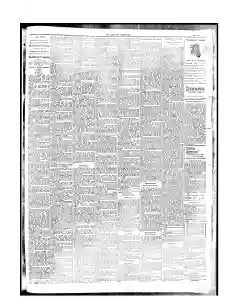
This newspaper page contains 16 articles. Subscribers can read the full text of each article.
Newspaper
Saint Arnaud Mercury
Location
Saint Arnaud, Victoria, Australia
Date
May 25, 1918
Page
5
A new story of absorbing interest and dramatic situations titled The Rockwell Combine starts in this issue by Charles Procter.
Grace Ormsby, a gracious daughter, falls for Julian Rockwell, son of Justus Rockwell. Frictions rise as Grace's father Peter Ormsby fights to protect his business against Rockwell's drapery combine. Hidden identities, betrayal, and a danger-filled night push love toward a perilous test.
A minister invites Mra Binn to dinner where seven year old prank attends church and explains thrift by saying he plans to put six panes in the collection plate but will instead give a penny after the sermon.
A distorted scene on a Woodlearching set shows a troubled melodrama with bungled readings and a conflicted hero failing to win audience sympathy. Climax nears as a whispered ultimatum echoes from above while the distressed heroine clings to a wavering resolve.
A content snippet shows a distressed elderly woman asking how to stay dry in wet weather. Private Murphy comforts her with sympathy and practical advice about wearing a hat and umbrella. The dialogue reflects concern and caregiving in a rough, informal tone.
A wartime column praises English and Australian youths volunteering despite being minors. It recalls a sixteen year old wounded at the Somme who lied about his age to join. The piece urges eligible men to enlist, arguing minors now ready to do a man's duty and urging Australians not to leave the burden to the youngsters.
An account of the French Foreign Legion describes a diverse mercenary force with no color barrier, including many Englishmen. It notes twelve peace battalions of about a thousand men, the harsh life and discipline, and the Legion’s role in leading any doomed missions when the French army needs a forlorn hope.
A group of four convicts chat about their crimes. one killed a man and another framed a name on a check while a third sought multiple spouses. A woman and a preacher reveal reactions as a prison guard asks about parish work and marriage advice follows.
A satirical piece recounts life at a cadet school with hard study and odd comforts. The narrator describes sleepless nights on an odd mattress, a botched commission, and the irony of military duties, ending with a jab at returns and absurd orders during wartime.
Fragmentary OCR shows a conversation about a cake and gifts. The text mentions Ted and Tadhty with unclear roles, referencing a father and a view of cake from View and other domestic details. The noisy lines indicate a domestic scene focusing on cakes and family hinting at modest celebration.
Vague fragments describe Ana Winek Marta floather and others in a street scene. A character notes a painting, a back view is shown, and a tense exchange references Robhet and the Gan dete. The line "Trend and water" is offered as a reply, and a hint of repetition appears with "Same na you had last time."
Promotes Indasia toilet soap as a refined blend capturing the elusive fragrance of the East in a dainty tablet. Describes groves and blended scents to appeal to the senses of perfume lovers.
A compact historical arc traces Jerusalem from ancient Davidic throne through Solomon's Temple, Calvary, Titus siege, and medieval Muslim and Christian struggles, ending with the British forces described as Crusader prototypes delivering a modern rescue.
A famed divine cancelled a provincial town lecture on conscience due to a prior commitment. The secretary’s note said no harm done and included a cheeky offer: four members of a traveling minstrel troupe would perform an absurd substitute for sixpence, described as a transfer of the other entertainment.
A fragmentary dialogue centers on a young man and Miss Wank during supper. He suggests a link between appetite and character, asking, Do you know that we become what we most enjoy. The exchange mixes witty inquiry with awkward social banter.
An unreadable OCR fragment mentions a scene with unfamiliar terms and jumbled phrases. It hints at a walk, sensory imagery, and names that are garbled, offering little clear factual content to identify people, places, or events.
We want people to find what they are looking for at NewspaperArchive. We are confident that we have the newspapers that will increase the value of your family history or other historical research. With our 7-day free trial, you can view the documents you find for free.
People find the most success using advanced search. Try plugging in keywords, names, dates, and locations, and get matched with results from the entire collection of newspapers at NewspaperArchive!
You can also successfully find newspapers by these browse options. Explore our archives on your own!
Browse by location and discover newspapers from all across the world.
Browse by date and find publications for a specific day or era.
Browse old newspaper publications to find specific newspapers.