Bosnian capital besieged as heavy guns boom
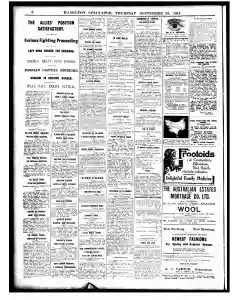
Reports describe furious fighting as Allied operations press on. Bosnian capital endures intense bombardment with enemy artillery keeping up the siege.

 This is just the beginning! Our collection holds over 300 years of history, including rare newspapers, obituaries, marriage records, birth records, and so much more—most of which you won’t find anywhere else!
This newspaper page contains 25 articles. Subscribers can read the full text of each article.
Newspaper
Hamilton Spectator
Location
Hamilton, Victoria, Australia
Date
Sep 24, 1914
Page
5
Reports describe furious fighting as Allied operations press on. Bosnian capital endures intense bombardment with enemy artillery keeping up the siege.
Fragmented OCR yields limited readable facts but signals ongoing World War II combat. Mentions Allied efforts, German resistance, French actions in Lorraine, and Italian stances. Reports from London and various fronts reference troop movements and strategic pressure as battles persist.
Fragmented copy notes British lines advancing near Paris with reports of improved 10K performance and German positions under pressure. The garbled text mentions Allied efforts, air and ground actions, and ongoing heavy fighting as the Allies push forward two days after a prior engagement.
Fragmentary OCR notes show a report about a nation remaining neutral amid protests in cities like Rome and others. It mentions Jaume and the Aeolian Government and hints at public sentiment against joining a conflict.
Belgian forces push, shelling and tracking German units in the western theater. Reports say Welzian patrols are countering, while German forces mount a defensive stand near Peover in France and Belgium prepares a reception for German actions.
Fragmentary dispatches describe Serasevd under siege with Austrian sorties repelled from Nish state and mixed notes on Montemegriun actions and nearby forces. The fragmentary text mentions firing lines and Allied movements, with unclear references to Towstuy Hsia and Teourté.
An unreadable OCR passage mentions names such as Hitomi and Alec and hints at a capture or event tied to light or sight. The fragmentary text lacks clear dates places or a coherent narrative to define a full news item or outcome.
Fragmentary AP dispatch notes German forces in Italy amid coastal movement. Nonspecific dates and locations obscure full deployment details while signaling continued Axis activity in the region.
A garbled OCR notice reports a British event near The Hague with mentions of shipping, a patrol, and a memorialing ceremony. It references dates and persons in a fragmented fashion, listing times and locations that are unclear due to scanning errors.
A garbled OCR fragment mentions Heine and Pattiers with references to clergy unions and fevers. The text lists scattered names and places, including a cathedral setting, muttered phrases about temper and trade, and hints of community tension and public discourse without clear facts or coherent events.
A garbled OCR style note references the battle of the Aishe with mentions of bayonet fighting and a high level of transcription error. It lacks clear names, dates, places, or outcomes to provide a solid factual summary.
A garbled report describes a November event with mentions of Wilesan Aveering and other unclear figures. The readable text hints at a performance or game where Toros Benave excelled, but details are fragmentary and many names remain uncertain.
Fragmentary OCR indicates retirement of Von Kluck and shifting German high command stance. Text mentions Antony and Forres with unclear dates and places. Named figures include Von Kluck and potential reference to strategic repositioning or retirement from life, with vague implication of wartime context.
A damaged OCR line references fog and alteration themes with unclear subjects. Readable fragments imply a note about changes or conditions affecting visibility, but concrete entities, dates, or actions are not discernible from the text provided.
A terse report outlines actions by a Japanese torpedo unit near Windon and Taualog. It notes the raid involved Rye Sia personnel and mentions piloting vessels, casualties, and naval movements with emphasis on strategic outcomes and local defense responses.
The readable fragment mentions names and numbers in a garbled way. It references Canada and a workspace context with 22,800 and names like Weoley Pundde and Tommy, but specifics are unclear. The source is too damaged to extract a coherent event, date, or outcome to form a substantive card.
Fragmentary OCR notes show names and phrases with unclear meaning. It mentions SRACOW and WOLES refusing defense and references a land, a line, a water context, and a duty of 40 units, but details are garbled. Entities are uncertain. reading suggests a political or military dispute with unspecified actors and locations.
Fragmentary OCR text mentions wheat price fixing and damaged names. No clear event, date, or entities beyond generic references. Summary preserves uncertainty while noting price fixing topic and unreadable elements.
Fragmentary OCR text hints at a furious battle near Homer’s Gables with references to battles, paths, and a tense military or civic clash. Readable segments mention renin, babies, and a looming June fare but lack clear events or identities.
Scant readable text mentions a desperate chanomotier and many women prisoners. Fragmentary notes reference Oke sfomian arventy in Sillenbere with unclear context or details.
Fragmentary OCR details a Tahare Patriotic fund total with figures 102 1416 and 130/475, plus references to individuals such as Smith, Minottas Damate, and W102. The text lists numerous names and quotients, showing a hurried community fundraising record and final reported grind total with ambiguous dates.
A fragile, scan error filled report from Melbourne market details varied cattle lots and prices. It mentions different stations and regional headings with fluctuating values, indicating quality and supply influenced by season and demand. specific figures appear garbled.
The Hoard's Report lists commodity prices with price ranges and market notes. The correspondent notes trends in ore and metal prices, with figures around 4 9 per unit and 10 per ton, reflecting wartime adjustments and market shifts. Prices are shown for several commodities amid war-related demand and supply changes.
Fragmentary OCR text from Xelbourve Produce Market mentions measurements, prices, and names in a garbled note. The legible items include references to dates, weights, and vendors, suggesting a market ledger or tally summary with multiple obscure entries. The exact details are unclear due to transcription errors.
Fragmentary text describes a morning event and alerts to a rescue or warning. Names and places are garbled, hindering precise identification of people or locations. The readable bits suggest a incident report or narrative but lack coherent details for concrete facts.
We want people to find what they are looking for at NewspaperArchive. We are confident that we have the newspapers that will increase the value of your family history or other historical research. With our 7-day free trial, you can view the documents you find for free.
People find the most success using advanced search. Try plugging in keywords, names, dates, and locations, and get matched with results from the entire collection of newspapers at NewspaperArchive!
You can also successfully find newspapers by these browse options. Explore our archives on your own!
Browse by location and discover newspapers from all across the world.
Browse by date and find publications for a specific day or era.
Browse old newspaper publications to find specific newspapers.