Proclamation of Edward VIII as King and Emperor
The notice declares Edward VIII as King of Great Britain Ireland and over the seas with God’s grave, defender of the faith and emperor title implied, reflecting a royal proclamation.
MENTIONED IN THIS ARTICLE
Great Britain
Ireland
Ming
London mourns as King dies crowds gather at Buckingham
Massive crowds form outside Buckingham Palace at midnight as news spreads of the King’s death. Police and guards stand steady while mourners, including workers and a blind man guided by a constable, share silent tribute. The Wireless announces the monarch’s passing as officials confirm the death moments later.
MENTIONED IN THIS ARTICLE
London
Buckingham Palace
Palace
Misney
Wulletin
West En
Humvnla
Royal Death Brings World Mourning and Transition
King George V dies at 11 55 pm with Queen Mary by his side. Edward VII to be sworn in today as Britain enters a new reign. Services planned at Westminster Abbey and Windsor, with mourning across the Empire and notices of bells tolling.
MENTIONED IN THIS ARTICLE
London
King George V
Duke of Gloucester
Sandringham House
Globe
Britain
Africa
Australia
Canada
India
Westminster Abbey
Empire
Edward Wili,ch
Prince of Wales
Edorard
Lelephone
Kent
Congo
Rached
Landon
Bt George’s
Windsor
Royal Mausoleum
Klaatstec
Victoria
Liverpool
Windnor Castle
Soveraiza
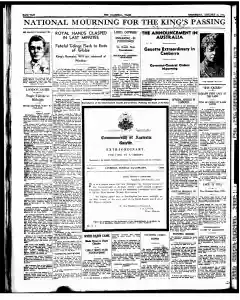
King George Dead as Commonwealth issues notice in Canberra
Gazette Extraordinary in Canberra announces the death of His Majesty King George VI. The Commonwealth Government reports the royal loss with sorrow and directs formal notification to the nation and the royal family, signed by J. A. Lyons.
MENTIONED IN THIS ARTICLE
A.abngette
Commonwealth
Excall
George Sandringham
J. A. Lyons
Commonweath Gazette
Commonwealth of Australia
Ut Bo
George W
Dawn Chronicle: Death Chamber Scene Amid Royal Prayer
Fragmentary OCR describes dawn scene in a death chamber with servants and tenants inclining to a prayer for King George. Names Menelt and nileat appear, but context is unclear. article tone suggests a historical royal testament or ominous court rite.
MENTIONED IN THIS ARTICLE
George
Chilly Mists Over Sandringham Parliament Shrine
The Archbishop of Canterbury spoke in a calm low voice requesting calm and a prayerful blessing for the man who has shouldered the burden placed by his father. The scene at Sandringham carried misty solemnity as mourners gathered.
MENTIONED IN THIS ARTICLE
Archbishop of
Canterbury
Tig Father
Touching family at Sandringham amid royal medical halt
A damaged report from Sandringham describes King George’s bedroom with blinds down as Princess Mary and other royals attend church at St Mary Magdalene. The Queen is seen ill, while the Prince of Wales and Duke of York appear fatigued and visit convalescing areas, with the Archbishop of Canterbury presiding at a garden ceremony.
Official Advices In Canberra After King's Death
Canberra residents learned of the King's death within minutes of London’s official notice. Authorities announced closures across government and business sectors, with only essential services operating. The city paused as memorial proclamations and gazettes were issued, detailing the transition and official messages from officials.
MENTIONED IN THIS ARTICLE
Te King
Canberra
Yirelasa
Baston
London
Moon
Commonwealth
Nasjonal Kroesst
Abopa Sud
I Commonwealth Departments
Sctivitien
Iin
Lord Wigram
Ir Jeaac Toes
Official Message From Australia on Royal Death
The Governor-General announces condolences on the monarch’s death. The proclamation calls for 70 gun salutes at noon and flags to fly at half-mast until sunset on the funeral day. Messages urge imperial unity and royal family mourning across the Commonwealth.
National Mourning Follows Court Precedent Amid Belated Obsequies
The text notes a prolonged period of mourning for Edward Vel and related public ritual, describing expected deep reflection and somber farewell. It mentions officials guiding solemn observances and widespread public participation during the mourning days across communities.
Queen Edward VIIs Heir At Risk As Regency Question Looms
The article outlines possible outcomes if Queen Mary remains at Buckingham Palace or relocates to Marlborough House to host King Edward VII. It notes Marlborough House vacancy, the line of succession with the Duke of York as presumptive, and the Prince of Wales title lapsing upon the heir apparent's status. It mentions Parliament's 1910 increase of Queen Mary's annuity and a potential 18 month gap before a crown is placed on Edward VII.
MENTIONED IN THIS ARTICLE
Cusen Mary
Buck Ingham Palace
Edward Will
Marlborough Moyne
Alexandra
Edward
Prince of Wales
York House
Marlborough House
York
Duke of
Tilaubelh
Margen Rasa
Nina
O4ttora
Lapse of Title First Occasion Since 1820
The text notes the lapse of the title Prince of Wales following George V's accession in 1829 and traces its renewal after long gaps. It mentions King George IV, Queen Victoria, Prince Edward, George III, and Edward VI in a condensed historical sequence.
MENTIONED IN THIS ARTICLE
Prince of Wales
George V
George IV
Wien Willams IV
Gears
England
Wmlum IV
Queen Victoria
Princ Edward
George III
Edward VI
Oaths of Allegiance To the British Crown Questioned
The article notes oaths of allegiance to the Crown taken by members of Parliament and Senators may be questioned. It discusses loyalty to King George VI and the potential shift to pledges to Edward VII and the Commonwealth, with implications for legislators and constitutional expectations.
MENTIONED IN THIS ARTICLE
Mouse of Representatives
Canberra
Yaster
Cammonwealth
Edeward ViI
Also Mentioned on This Page
His Majesty
Edward VIII
London Dumb
Wellington
Buckham Palace
Tia
Victoris ‘Memorial
Crowes
Amd
Gorrees
Polloe
Lato
King
Lord Gowrie
Melbourne
Sydney
Sree
Vaid “Ape Mill
Cnet Og Ede
Lore Goria Ag
Anberra
Reprodu
Austra
Gazette
Wey
General Post Office
Prime Minister's Department
Sandringham
Hi Excellency
At. Mary Magdalene
Sandring
King George's
Moyal
Terrier
Mia
Guscas
Prince
Walea
Dune
Kant
Ceme
Durhass
Bisck
Duke of York
Maenty
Ing Grange Syed AW
Prine
Wierams
Poaude
Pam
Thelin
Orora
Queen Mother
Mary
Princess Royal
Desirees
Dushesa
Glougester
Ducheas
Eleabeth
Margi
Buary'n Ane
Edward VII
Haw
George VI

 This is just the beginning! Our collection holds over 300 years of history, including rare newspapers, obituaries, marriage records, birth records, and so much more—most of which you won’t find anywhere else!